
23 Bucket Gardening Ideas That Turn Simple Containers into a Thriving Garden
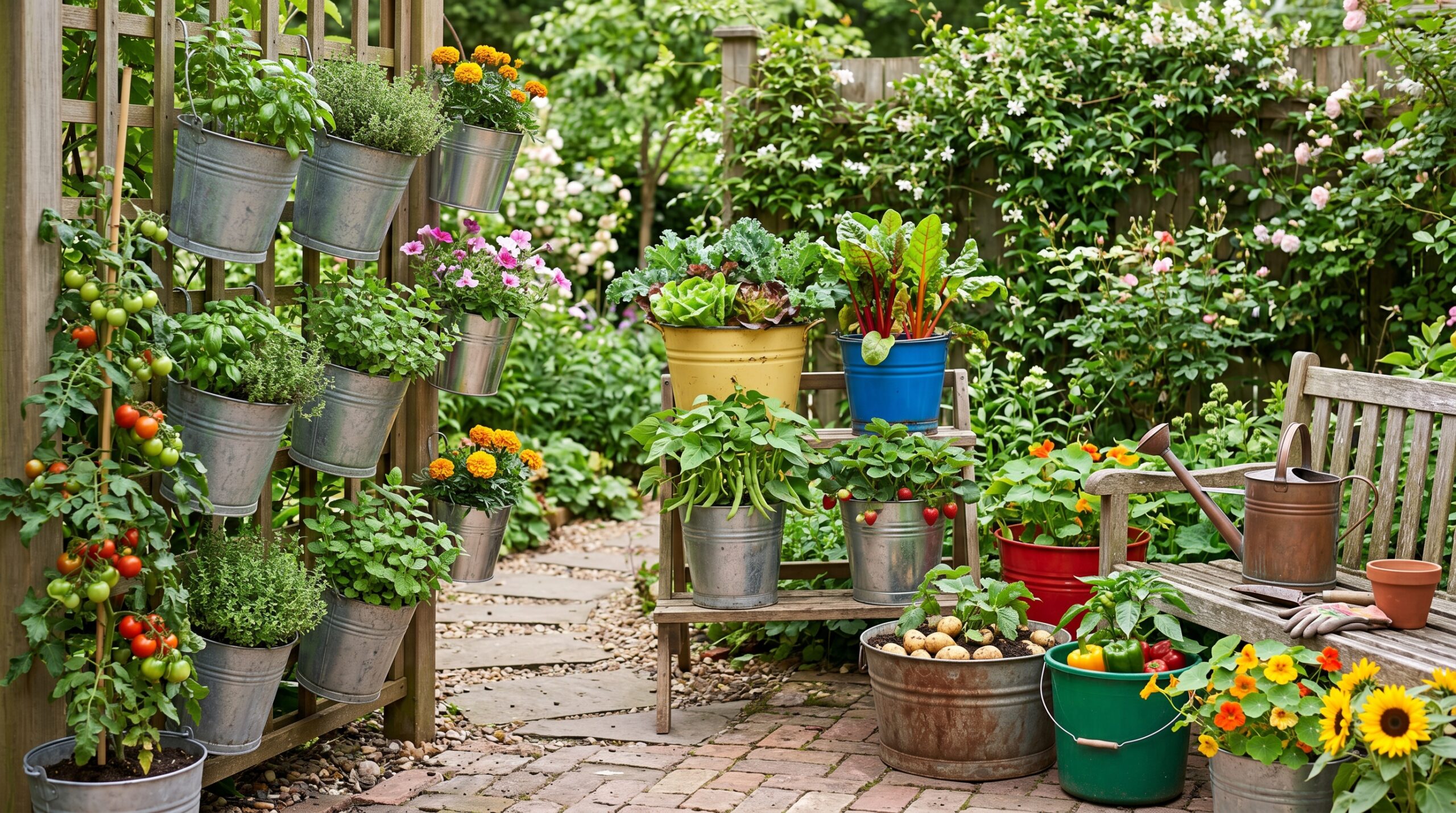
23 Bucket Gardening Ideas That Turn Simple Containers into a Thriving Garden
If you’ve ever dreamed of growing your own vegetables, herbs, or flowers but thought you needed a big backyard, I’ve got good news for you.
Bucket gardening proves that you don’t need acres of land to grow amazing plants.
Sometimes all you need is a simple bucket, a little soil, and a bit of curiosity.
I first experimented with bucket gardening during a summer when my yard space was limited.
I grabbed a few old buckets, drilled drainage holes, filled them with soil, and planted tomatoes.
That tiny experiment turned into one of the most productive mini gardens I’ve ever grown. In fact, many urban gardeners now swear by this method.
According to the National Gardening Association, container gardening—including bucket gardening—has increased by more than 30% in the last decade, especially in small homes and apartments.
Let’s walk through 23 bucket gardening ideas that can help you grow more food, save space, and enjoy gardening even if you only have a balcony or a small patio.
1. Grow Tomatoes in 5-Gallon Buckets
If there’s one crop that absolutely thrives in bucket gardening, it’s tomatoes.
A 5-gallon bucket provides just enough root space for most tomato varieties, especially determinate types.
I like to drill 6–8 holes at the bottom for drainage, then add a layer of small stones before filling it with high-quality potting mix.
Here’s a trick many gardeners overlook: plant tomatoes deeper than usual. Tomatoes grow extra roots along buried stems, which means stronger plants and higher yields.
Why this works so well:
- Buckets warm up faster in spring
- Soil drainage is easy to control
- You can move plants for better sunlight
One summer I harvested nearly 25 pounds of tomatoes from just three buckets. It felt like discovering a secret shortcut to gardening success.
For best results:
- Add a support stake or cage
- Feed with liquid fertilizer every two weeks
- Place buckets in 6–8 hours of sunlight
Your tomatoes will reward you with baskets of fresh fruit.
2. Create a Portable Herb Garden
Herbs and bucket gardening go together like tea and biscuits.
Herbs usually have shallow roots, so buckets provide plenty of space for them to grow happily.
I often plant basil, mint, cilantro, thyme, and parsley in separate buckets.
The biggest benefit? Mobility.
You can move your herb buckets:
- Closer to the kitchen
- Into sunlight
- Under shelter during heavy rain
Imagine stepping outside, snipping fresh basil for pasta, and knowing you grew it yourself.
Studies from Texas A&M Agrilife Extension show that fresh herbs can lose up to 60% of their flavor oils within hours of harvest, which means growing them nearby gives you the best taste possible.
Tips for herb bucket gardening:
- Use well-draining potting soil
- Avoid overwatering
- Harvest regularly to encourage new growth
Trust me, once you start growing herbs this way, store-bought ones feel like a poor substitute.
3. Plant Potatoes in Stacked Buckets
Growing potatoes in buckets feels almost magical.
Instead of digging trenches, you simply stack soil layers as the plant grows. I remember the first time I tried this—it felt like opening a treasure chest when harvest time arrived.
Here’s how it works:
- Fill the bucket with 4–6 inches of soil
- Place seed potatoes on top
- Cover lightly with soil
- Add more soil as the plant grows taller
This process, called “hilling,” encourages more tubers to form.
Many gardeners report harvesting 5–10 pounds of potatoes from a single bucket when done properly.
Pro tip: drill side holes around the bucket to improve airflow and drainage.
4. Grow Peppers in Buckets
Peppers absolutely love container life.
Both bell peppers and chili peppers adapt beautifully to bucket gardening because they prefer warm soil and controlled watering.
I’ve noticed that peppers in buckets often produce earlier because the soil warms faster than ground beds.
Key success tips:
- Use 5-gallon buckets
- Place in full sun
- Add compost for nutrients
A study from the University of Florida IFAS Extension found that peppers grown in containers can produce yields comparable to garden beds when given adequate sunlight and fertilizer.
That’s great news if you’re gardening on a balcony or patio.
5. Grow Leafy Greens for Continuous Harvests
If you want fast results from bucket gardening, leafy greens are your best friend.
Lettuce, spinach, kale, and arugula grow quickly and don’t need deep soil.
You can harvest leaves every week without killing the plant—a technique called “cut-and-come-again harvesting.”
I once planted three buckets of lettuce and ended up with salad for weeks.
Why leafy greens thrive in buckets:
- Easy moisture control
- Less pest damage
- Portable shade options in hot weather
Just keep the soil slightly moist and provide partial sun.
Your salad bowl will thank you.
6. Grow Strawberries in Buckets
Strawberries in buckets feel like a little luxury.
Instead of bending down to the ground, you can place the bucket on a table or stand, making harvesting easier.
Many gardeners drill holes around the sides of the bucket to create multi-level strawberry planters.
Benefits include:
- Better airflow
- Reduced pest damage
- Easier fruit picking
According to agricultural research, container strawberries often produce cleaner fruit because they avoid soil contact.
And honestly, nothing beats the taste of a freshly picked strawberry warmed by sunlight.
7. Bucket Gardening for Cucumbers
Cucumbers might seem like sprawling plants, but they actually adapt surprisingly well to buckets.
The secret is vertical support.
Add a trellis or tall stake to the bucket, and cucumbers will happily climb upward instead of spreading across the ground.
Benefits:
- Saves space
- Improves airflow
- Reduces disease risk
One summer I trained cucumbers up a simple bamboo trellis attached to a bucket.
The vines climbed like eager hikers, and soon I had more cucumbers than I knew what to do with.
8. Grow Carrots in Deep Buckets
Root crops like carrots need depth, which makes tall buckets perfect.
Use buckets at least 12–16 inches deep to give carrots enough room to develop straight roots.
Loose, sandy soil works best.
A helpful trick:
Mix sand with potting soil to keep it light and fluffy.
Carrots grown this way are often:
- Straighter
- Cleaner
- Easier to harvest
Pulling fresh carrots from a bucket still feels like pulling treasure from the earth.
9. Grow Onions and Garlic
Both onions and garlic grow well in buckets because their root systems stay relatively shallow.
You can plant several bulbs in a single bucket.
Advantages include:
- Easy spacing
- Fewer weeds
- Controlled watering
Garlic planted in fall often produces harvestable bulbs by early summer.
There’s something satisfying about growing your own garlic—like having a secret ingredient for every recipe.
10. Try a Bucket Flower Garden
Bucket gardening isn’t only about vegetables.
Flower buckets can brighten patios, balconies, or walkways.
Some great options include:
- Marigolds
- Petunias
- Zinnias
- Cosmos
Flowers in buckets also attract pollinators like bees and butterflies.
Research from the Xerces Society shows that pollinator-friendly flowers can significantly increase fruit yields in nearby gardens.
Think of flower buckets as tiny wildlife hotels.
11. Grow Beans with Vertical Supports
Beans grow incredibly well in bucket gardens.
Pole beans climb upward, making them ideal for small-space gardening.
Just add:
- Bamboo poles
- A small trellis
- Or a wire frame
Beans will quickly wrap around the support.
They also improve soil health by fixing nitrogen, which means they add natural nutrients to the soil.
It’s like having plants that fertilize themselves.
12. Build a Bucket Compost System
One clever twist on bucket gardening is creating a mini compost bin.
You can turn kitchen scraps into nutrient-rich compost using stacked buckets with ventilation holes.
Benefits:
- Reduces food waste
- Creates free fertilizer
- Improves soil quality
I once used this method to recycle vegetable peels, coffee grounds, and eggshells.
Within a few months, I had rich compost ready for my garden buckets.
13. Grow Eggplants in Buckets
Eggplants thrive in warm soil, which makes buckets ideal.
Choose compact varieties and provide full sunlight.
Eggplants need:
- Rich soil
- Consistent watering
- Warm temperatures
Many gardeners report excellent yields from single bucket plants producing 6–10 fruits.
And those glossy purple fruits always look impressive.
14. Create a Salad Bucket
Imagine growing an entire salad in one bucket.
You can combine:
- Lettuce
- Radishes
- Spinach
- Green onions
These crops grow quickly and share similar care requirements.
This technique is sometimes called “companion container planting.”
It’s efficient, beautiful, and surprisingly productive.
15. Bucket Gardening for Zucchini
Zucchini plants can grow large, but compact varieties do well in buckets.
Use a large container (at least 5 gallons) and nutrient-rich soil.
Zucchini plants are famously productive.
Gardeners often joke that zucchini plants produce so much that neighbors start avoiding them in summer.
Buckets help control the plant’s spread and keep the harvest manageable.
16. Hanging Bucket Gardens
Sometimes the best place for a garden is above the ground.
Hanging bucket gardens are great for:
- Strawberries
- Herbs
- Flowers
Add strong rope or chains and hang buckets from pergolas or balconies.
Vertical gardening maximizes space and adds visual charm.
It’s like creating a floating garden.
17. Self-Watering Bucket Systems
A self-watering bucket garden can save time and reduce watering stress.
This system uses a water reservoir at the bottom of the bucket with a wick or soil column that draws moisture upward.
Benefits include:
- Less frequent watering
- Healthier roots
- Consistent moisture
These systems are especially helpful in hot climates.
Many gardeners say self-watering buckets improved their yields significantly.
18. Grow Sweet Potatoes
Sweet potatoes grow surprisingly well in buckets.
Their vines spill over the sides, creating a lush green display.
Use large containers with loose soil.
Harvesting sweet potatoes feels like uncovering hidden treasure buried beneath the soil.
19. Bucket Gardening for Radishes
Radishes are one of the fastest crops you can grow.
Some varieties mature in just 25–30 days.
That means you can plant multiple rounds in the same bucket throughout the season.
They’re perfect for beginner gardeners who want quick results.
20. Grow Microgreens in Buckets
Microgreens are tiny plants harvested early for maximum flavor and nutrition.
They grow well in shallow containers or bucket lids.
Studies show microgreens can contain up to 40 times more nutrients than mature plants.
Popular varieties include:
- Sunflower
- Pea shoots
- Radish greens
They’re like tiny flavor bombs for salads and sandwiches.
21. Build a Bucket Trellis Garden
A bucket trellis system lets you grow climbing plants in tight spaces.
Attach a trellis behind several buckets and plant crops like:
- Cucumbers
- Beans
- Peas
The vertical growth creates a living green wall.
Besides productivity, it also looks beautiful.
22. Grow Herbs Indoors with Buckets
Bucket gardening isn’t limited to outdoors.
With good sunlight or grow lights, you can grow herbs indoors year-round.
I keep a few herb buckets near a sunny window, and the smell of fresh basil and rosemary makes the kitchen feel alive.
Indoor bucket gardening offers:
- Year-round harvests
- Fresh flavor anytime
- A calming green atmosphere
23. Build a Complete Bucket Vegetable Garden
The ultimate bucket gardening idea is creating a full vegetable garden using only buckets.
You can grow:
- Tomatoes
- Peppers
- Lettuce
- Beans
- Herbs
- Radishes
Arrange buckets in rows or clusters to create a compact garden system.
Many urban gardeners grow over 15 different crops using buckets alone.
It proves something important: gardening isn’t about land size. It’s about creativity.
Final Thoughts
Bucket gardening is one of the most accessible ways to start growing your own food.
You don’t need fancy equipment, expensive raised beds, or acres of land. Sometimes a humble bucket can become the foundation of an entire garden.
I’ve seen people transform balconies, rooftops, and small patios into thriving bucket gardens. The beauty of this method lies in its simplicity. A few buckets, good soil, sunlight, and patience—that’s really all it takes.
And the moment you harvest your first tomato or handful of lettuce from a bucket you planted yourself, something clicks. Gardening stops feeling complicated and starts feeling personal.
If you’ve been thinking about starting a garden but didn’t know where to begin, bucket gardening might be your perfect starting point.
Grab a bucket, drill a few holes, add soil, plant something—and watch your tiny garden grow into something surprisingly abundant.
FAQs About Bucket Gardening
What size bucket is best for bucket gardening?
A 5-gallon bucket is the most commonly used size because it provides enough root space for many vegetables like tomatoes, peppers, and cucumbers.
Do buckets need drainage holes?
Yes. Drainage holes are essential to prevent root rot. Most gardeners drill 6–10 holes in the bottom of the bucket.
What soil should I use for bucket gardening?
Use high-quality potting mix rather than regular garden soil. Potting mix provides better drainage and aeration for container plants.
How often should I water bucket plants?
Bucket plants usually need watering once a day in hot weather and every few days in cooler conditions. Always check the soil moisture before watering.
Can I reuse buckets every year?
Yes. Clean buckets with mild soap and water between seasons to remove pests and diseases.
Is bucket gardening good for beginners?
Absolutely. Bucket gardening is one of the easiest gardening methods, making it perfect for beginners who want to grow food in small spaces.23 Bucket Gardening Ideas That Turn Simple Containers into a Thriving Garden
If you’ve ever dreamed of growing your own vegetables, herbs, or flowers but thought you needed a big backyard, I’ve got good news for you. Bucket gardening proves that you don’t need acres of land to grow amazing plants. Sometimes all you need is a simple bucket, a little soil, and a bit of curiosity.
I first experimented with bucket gardening during a summer when my yard space was limited. I grabbed a few old buckets, drilled drainage holes, filled them with soil, and planted tomatoes. That tiny experiment turned into one of the most productive mini gardens I’ve ever grown. In fact, many urban gardeners now swear by this method. According to the National Gardening Association, container gardening—including bucket gardening—has increased by more than 30% in the last decade, especially in small homes and apartments.
Let’s walk through 23 bucket gardening ideas that can help you grow more food, save space, and enjoy gardening even if you only have a balcony or a small patio.
1. Grow Tomatoes in 5-Gallon Buckets
If there’s one crop that absolutely thrives in bucket gardening, it’s tomatoes.
A 5-gallon bucket provides just enough root space for most tomato varieties, especially determinate types. I like to drill 6–8 holes at the bottom for drainage, then add a layer of small stones before filling it with high-quality potting mix.
Here’s a trick many gardeners overlook: plant tomatoes deeper than usual. Tomatoes grow extra roots along buried stems, which means stronger plants and higher yields.
Why this works so well:
- Buckets warm up faster in spring
- Soil drainage is easy to control
- You can move plants for better sunlight
One summer I harvested nearly 25 pounds of tomatoes from just three buckets. It felt like discovering a secret shortcut to gardening success.
For best results:
- Add a support stake or cage
- Feed with liquid fertilizer every two weeks
- Place buckets in 6–8 hours of sunlight
Your tomatoes will reward you with baskets of fresh fruit.
2. Create a Portable Herb Garden
Herbs and bucket gardening go together like tea and biscuits.
Herbs usually have shallow roots, so buckets provide plenty of space for them to grow happily. I often plant basil, mint, cilantro, thyme, and parsley in separate buckets.
The biggest benefit? Mobility.
You can move your herb buckets:
- Closer to the kitchen
- Into sunlight
- Under shelter during heavy rain
Imagine stepping outside, snipping fresh basil for pasta, and knowing you grew it yourself.
Studies from Texas A&M Agrilife Extension show that fresh herbs can lose up to 60% of their flavor oils within hours of harvest, which means growing them nearby gives you the best taste possible.
Tips for herb bucket gardening:
- Use well-draining potting soil
- Avoid overwatering
- Harvest regularly to encourage new growth
Trust me, once you start growing herbs this way, store-bought ones feel like a poor substitute.
3. Plant Potatoes in Stacked Buckets
Growing potatoes in buckets feels almost magical.
Instead of digging trenches, you simply stack soil layers as the plant grows. I remember the first time I tried this—it felt like opening a treasure chest when harvest time arrived.
Here’s how it works:
- Fill the bucket with 4–6 inches of soil
- Place seed potatoes on top
- Cover lightly with soil
- Add more soil as the plant grows taller
This process, called “hilling,” encourages more tubers to form.
Many gardeners report harvesting 5–10 pounds of potatoes from a single bucket when done properly.
Pro tip: drill side holes around the bucket to improve airflow and drainage.
4. Grow Peppers in Buckets
Peppers absolutely love container life.
Both bell peppers and chili peppers adapt beautifully to bucket gardening because they prefer warm soil and controlled watering.
I’ve noticed that peppers in buckets often produce earlier because the soil warms faster than ground beds.
Key success tips:
- Use 5-gallon buckets
- Place in full sun
- Add compost for nutrients
A study from the University of Florida IFAS Extension found that peppers grown in containers can produce yields comparable to garden beds when given adequate sunlight and fertilizer.
That’s great news if you’re gardening on a balcony or patio.
5. Grow Leafy Greens for Continuous Harvests
If you want fast results from bucket gardening, leafy greens are your best friend.
Lettuce, spinach, kale, and arugula grow quickly and don’t need deep soil.
You can harvest leaves every week without killing the plant—a technique called “cut-and-come-again harvesting.”
I once planted three buckets of lettuce and ended up with salad for weeks.
Why leafy greens thrive in buckets:
- Easy moisture control
- Less pest damage
- Portable shade options in hot weather
Just keep the soil slightly moist and provide partial sun.
Your salad bowl will thank you.
6. Grow Strawberries in Buckets
Strawberries in buckets feel like a little luxury.
Instead of bending down to the ground, you can place the bucket on a table or stand, making harvesting easier.
Many gardeners drill holes around the sides of the bucket to create multi-level strawberry planters.
Benefits include:
- Better airflow
- Reduced pest damage
- Easier fruit picking
According to agricultural research, container strawberries often produce cleaner fruit because they avoid soil contact.
And honestly, nothing beats the taste of a freshly picked strawberry warmed by sunlight.
7. Bucket Gardening for Cucumbers
Cucumbers might seem like sprawling plants, but they actually adapt surprisingly well to buckets.
The secret is vertical support.
Add a trellis or tall stake to the bucket, and cucumbers will happily climb upward instead of spreading across the ground.
Benefits:
- Saves space
- Improves airflow
- Reduces disease risk
One summer I trained cucumbers up a simple bamboo trellis attached to a bucket. The vines climbed like eager hikers, and soon I had more cucumbers than I knew what to do with.
8. Grow Carrots in Deep Buckets
Root crops like carrots need depth, which makes tall buckets perfect.
Use buckets at least 12–16 inches deep to give carrots enough room to develop straight roots.
Loose, sandy soil works best.
A helpful trick:
Mix sand with potting soil to keep it light and fluffy.
Carrots grown this way are often:
- Straighter
- Cleaner
- Easier to harvest
Pulling fresh carrots from a bucket still feels like pulling treasure from the earth.
9. Grow Onions and Garlic
Both onions and garlic grow well in buckets because their root systems stay relatively shallow.
You can plant several bulbs in a single bucket.
Advantages include:
- Easy spacing
- Fewer weeds
- Controlled watering
Garlic planted in fall often produces harvestable bulbs by early summer.
There’s something satisfying about growing your own garlic—like having a secret ingredient for every recipe.
10. Try a Bucket Flower Garden
Bucket gardening isn’t only about vegetables.
Flower buckets can brighten patios, balconies, or walkways.
Some great options include:
- Marigolds
- Petunias
- Zinnias
- Cosmos
Flowers in buckets also attract pollinators like bees and butterflies.
Research from the Xerces Society shows that pollinator-friendly flowers can significantly increase fruit yields in nearby gardens.
Think of flower buckets as tiny wildlife hotels.
11. Grow Beans with Vertical Supports
Beans grow incredibly well in bucket gardens.
Pole beans climb upward, making them ideal for small-space gardening.
Just add:
- Bamboo poles
- A small trellis
- Or a wire frame
Beans will quickly wrap around the support.
They also improve soil health by fixing nitrogen, which means they add natural nutrients to the soil.
It’s like having plants that fertilize themselves.
12. Build a Bucket Compost System
One clever twist on bucket gardening is creating a mini compost bin.
You can turn kitchen scraps into nutrient-rich compost using stacked buckets with ventilation holes.
Benefits:
- Reduces food waste
- Creates free fertilizer
- Improves soil quality
I once used this method to recycle vegetable peels, coffee grounds, and eggshells.
Within a few months, I had rich compost ready for my garden buckets.
13. Grow Eggplants in Buckets
Eggplants thrive in warm soil, which makes buckets ideal.
Choose compact varieties and provide full sunlight.
Eggplants need:
- Rich soil
- Consistent watering
- Warm temperatures
Many gardeners report excellent yields from single bucket plants producing 6–10 fruits.
And those glossy purple fruits always look impressive.
14. Create a Salad Bucket
Imagine growing an entire salad in one bucket.
You can combine:
- Lettuce
- Radishes
- Spinach
- Green onions
These crops grow quickly and share similar care requirements.
This technique is sometimes called “companion container planting.”
It’s efficient, beautiful, and surprisingly productive.
15. Bucket Gardening for Zucchini
Zucchini plants can grow large, but compact varieties do well in buckets.
Use a large container (at least 5 gallons) and nutrient-rich soil.
Zucchini plants are famously productive.
Gardeners often joke that zucchini plants produce so much that neighbors start avoiding them in summer.
Buckets help control the plant’s spread and keep the harvest manageable.
16. Hanging Bucket Gardens
Sometimes the best place for a garden is above the ground.
Hanging bucket gardens are great for:
- Strawberries
- Herbs
- Flowers
Add strong rope or chains and hang buckets from pergolas or balconies.
Vertical gardening maximizes space and adds visual charm.
It’s like creating a floating garden.
17. Self-Watering Bucket Systems
A self-watering bucket garden can save time and reduce watering stress.
This system uses a water reservoir at the bottom of the bucket with a wick or soil column that draws moisture upward.
Benefits include:
- Less frequent watering
- Healthier roots
- Consistent moisture
These systems are especially helpful in hot climates.
Many gardeners say self-watering buckets improved their yields significantly.
18. Grow Sweet Potatoes
Sweet potatoes grow surprisingly well in buckets.
Their vines spill over the sides, creating a lush green display.
Use large containers with loose soil.
Harvesting sweet potatoes feels like uncovering hidden treasure buried beneath the soil.
19. Bucket Gardening for Radishes
Radishes are one of the fastest crops you can grow.
Some varieties mature in just 25–30 days.
That means you can plant multiple rounds in the same bucket throughout the season.
They’re perfect for beginner gardeners who want quick results.
20. Grow Microgreens in Buckets
Microgreens are tiny plants harvested early for maximum flavor and nutrition.
They grow well in shallow containers or bucket lids.
Studies show microgreens can contain up to 40 times more nutrients than mature plants.
Popular varieties include:
- Sunflower
- Pea shoots
- Radish greens
They’re like tiny flavor bombs for salads and sandwiches.
21. Build a Bucket Trellis Garden
A bucket trellis system lets you grow climbing plants in tight spaces.
Attach a trellis behind several buckets and plant crops like:
- Cucumbers
- Beans
- Peas
The vertical growth creates a living green wall.
Besides productivity, it also looks beautiful.
22. Grow Herbs Indoors with Buckets
Bucket gardening isn’t limited to outdoors.
With good sunlight or grow lights, you can grow herbs indoors year-round.
I keep a few herb buckets near a sunny window, and the smell of fresh basil and rosemary makes the kitchen feel alive.
Indoor bucket gardening offers:
- Year-round harvests
- Fresh flavor anytime
- A calming green atmosphere
23. Build a Complete Bucket Vegetable Garden
The ultimate bucket gardening idea is creating a full vegetable garden using only buckets.
You can grow:
- Tomatoes
- Peppers
- Lettuce
- Beans
- Herbs
- Radishes
Arrange buckets in rows or clusters to create a compact garden system.
Many urban gardeners grow over 15 different crops using buckets alone.
It proves something important: gardening isn’t about land size. It’s about creativity.
Final Thoughts
Bucket gardening is one of the most accessible ways to start growing your own food.
You don’t need fancy equipment, expensive raised beds, or acres of land. Sometimes a humble bucket can become the foundation of an entire garden.
I’ve seen people transform balconies, rooftops, and small patios into thriving bucket gardens. The beauty of this method lies in its simplicity. A few buckets, good soil, sunlight, and patience—that’s really all it takes.
And the moment you harvest your first tomato or handful of lettuce from a bucket you planted yourself, something clicks. Gardening stops feeling complicated and starts feeling personal.
If you’ve been thinking about starting a garden but didn’t know where to begin, bucket gardening might be your perfect starting point.
Grab a bucket, drill a few holes, add soil, plant something—and watch your tiny garden grow into something surprisingly abundant.
FAQs About Bucket Gardening
What size bucket is best for bucket gardening?
A 5-gallon bucket is the most commonly used size because it provides enough root space for many vegetables like tomatoes, peppers, and cucumbers.
Do buckets need drainage holes?
Yes. Drainage holes are essential to prevent root rot. Most gardeners drill 6–10 holes in the bottom of the bucket.
What soil should I use for bucket gardening?
Use high-quality potting mix rather than regular garden soil. Potting mix provides better drainage and aeration for container plants.
How often should I water bucket plants?
Bucket plants usually need watering once a day in hot weather and every few days in cooler conditions. Always check the soil moisture before watering.
Can I reuse buckets every year?
Yes. Clean buckets with mild soap and water between seasons to remove pests and diseases.
Is bucket gardening good for beginners?
Absolutely. Bucket gardening is one of the easiest gardening methods, making it perfect for beginners who want to grow food in small spaces.23 Bucket Gardening Ideas That Turn Simple Containers into a Thriving Garden
If you’ve ever dreamed of growing your own vegetables, herbs, or flowers but thought you needed a big backyard, I’ve got good news for you. Bucket gardening proves that you don’t need acres of land to grow amazing plants. Sometimes all you need is a simple bucket, a little soil, and a bit of curiosity.
I first experimented with bucket gardening during a summer when my yard space was limited. I grabbed a few old buckets, drilled drainage holes, filled them with soil, and planted tomatoes. That tiny experiment turned into one of the most productive mini gardens I’ve ever grown. In fact, many urban gardeners now swear by this method. According to the National Gardening Association, container gardening—including bucket gardening—has increased by more than 30% in the last decade, especially in small homes and apartments.
Let’s walk through 23 bucket gardening ideas that can help you grow more food, save space, and enjoy gardening even if you only have a balcony or a small patio.
1. Grow Tomatoes in 5-Gallon Buckets
If there’s one crop that absolutely thrives in bucket gardening, it’s tomatoes.
A 5-gallon bucket provides just enough root space for most tomato varieties, especially determinate types. I like to drill 6–8 holes at the bottom for drainage, then add a layer of small stones before filling it with high-quality potting mix.
Here’s a trick many gardeners overlook: plant tomatoes deeper than usual. Tomatoes grow extra roots along buried stems, which means stronger plants and higher yields.
Why this works so well:
- Buckets warm up faster in spring
- Soil drainage is easy to control
- You can move plants for better sunlight
One summer I harvested nearly 25 pounds of tomatoes from just three buckets. It felt like discovering a secret shortcut to gardening success.
For best results:
- Add a support stake or cage
- Feed with liquid fertilizer every two weeks
- Place buckets in 6–8 hours of sunlight
Your tomatoes will reward you with baskets of fresh fruit.
2. Create a Portable Herb Garden
Herbs and bucket gardening go together like tea and biscuits.
Herbs usually have shallow roots, so buckets provide plenty of space for them to grow happily. I often plant basil, mint, cilantro, thyme, and parsley in separate buckets.
The biggest benefit? Mobility.
You can move your herb buckets:
- Closer to the kitchen
- Into sunlight
- Under shelter during heavy rain
Imagine stepping outside, snipping fresh basil for pasta, and knowing you grew it yourself.
Studies from Texas A&M Agrilife Extension show that fresh herbs can lose up to 60% of their flavor oils within hours of harvest, which means growing them nearby gives you the best taste possible.
Tips for herb bucket gardening:
- Use well-draining potting soil
- Avoid overwatering
- Harvest regularly to encourage new growth
Trust me, once you start growing herbs this way, store-bought ones feel like a poor substitute.
3. Plant Potatoes in Stacked Buckets
Growing potatoes in buckets feels almost magical.
Instead of digging trenches, you simply stack soil layers as the plant grows. I remember the first time I tried this—it felt like opening a treasure chest when harvest time arrived.
Here’s how it works:
- Fill the bucket with 4–6 inches of soil
- Place seed potatoes on top
- Cover lightly with soil
- Add more soil as the plant grows taller
This process, called “hilling,” encourages more tubers to form.
Many gardeners report harvesting 5–10 pounds of potatoes from a single bucket when done properly.
Pro tip: drill side holes around the bucket to improve airflow and drainage.
4. Grow Peppers in Buckets
Peppers absolutely love container life.
Both bell peppers and chili peppers adapt beautifully to bucket gardening because they prefer warm soil and controlled watering.
I’ve noticed that peppers in buckets often produce earlier because the soil warms faster than ground beds.
Key success tips:
- Use 5-gallon buckets
- Place in full sun
- Add compost for nutrients
A study from the University of Florida IFAS Extension found that peppers grown in containers can produce yields comparable to garden beds when given adequate sunlight and fertilizer.
That’s great news if you’re gardening on a balcony or patio.
5. Grow Leafy Greens for Continuous Harvests
If you want fast results from bucket gardening, leafy greens are your best friend.
Lettuce, spinach, kale, and arugula grow quickly and don’t need deep soil.
You can harvest leaves every week without killing the plant—a technique called “cut-and-come-again harvesting.”
I once planted three buckets of lettuce and ended up with salad for weeks.
Why leafy greens thrive in buckets:
- Easy moisture control
- Less pest damage
- Portable shade options in hot weather
Just keep the soil slightly moist and provide partial sun.
Your salad bowl will thank you.
6. Grow Strawberries in Buckets
Strawberries in buckets feel like a little luxury.
Instead of bending down to the ground, you can place the bucket on a table or stand, making harvesting easier.
Many gardeners drill holes around the sides of the bucket to create multi-level strawberry planters.
Benefits include:
- Better airflow
- Reduced pest damage
- Easier fruit picking
According to agricultural research, container strawberries often produce cleaner fruit because they avoid soil contact.
And honestly, nothing beats the taste of a freshly picked strawberry warmed by sunlight.
7. Bucket Gardening for Cucumbers
Cucumbers might seem like sprawling plants, but they actually adapt surprisingly well to buckets.
The secret is vertical support.
Add a trellis or tall stake to the bucket, and cucumbers will happily climb upward instead of spreading across the ground.
Benefits:
- Saves space
- Improves airflow
- Reduces disease risk
One summer I trained cucumbers up a simple bamboo trellis attached to a bucket. The vines climbed like eager hikers, and soon I had more cucumbers than I knew what to do with.
8. Grow Carrots in Deep Buckets
Root crops like carrots need depth, which makes tall buckets perfect.
Use buckets at least 12–16 inches deep to give carrots enough room to develop straight roots.
Loose, sandy soil works best.
A helpful trick:
Mix sand with potting soil to keep it light and fluffy.
Carrots grown this way are often:
- Straighter
- Cleaner
- Easier to harvest
Pulling fresh carrots from a bucket still feels like pulling treasure from the earth.
9. Grow Onions and Garlic
Both onions and garlic grow well in buckets because their root systems stay relatively shallow.
You can plant several bulbs in a single bucket.
Advantages include:
- Easy spacing
- Fewer weeds
- Controlled watering
Garlic planted in fall often produces harvestable bulbs by early summer.
There’s something satisfying about growing your own garlic—like having a secret ingredient for every recipe.
10. Try a Bucket Flower Garden
Bucket gardening isn’t only about vegetables.
Flower buckets can brighten patios, balconies, or walkways.
Some great options include:
- Marigolds
- Petunias
- Zinnias
- Cosmos
Flowers in buckets also attract pollinators like bees and butterflies.
Research from the Xerces Society shows that pollinator-friendly flowers can significantly increase fruit yields in nearby gardens.
Think of flower buckets as tiny wildlife hotels.
11. Grow Beans with Vertical Supports
Beans grow incredibly well in bucket gardens.
Pole beans climb upward, making them ideal for small-space gardening.
Just add:
- Bamboo poles
- A small trellis
- Or a wire frame
Beans will quickly wrap around the support.
They also improve soil health by fixing nitrogen, which means they add natural nutrients to the soil.
It’s like having plants that fertilize themselves.
12. Build a Bucket Compost System
One clever twist on bucket gardening is creating a mini compost bin.
You can turn kitchen scraps into nutrient-rich compost using stacked buckets with ventilation holes.
Benefits:
- Reduces food waste
- Creates free fertilizer
- Improves soil quality
I once used this method to recycle vegetable peels, coffee grounds, and eggshells.
Within a few months, I had rich compost ready for my garden buckets.
13. Grow Eggplants in Buckets
Eggplants thrive in warm soil, which makes buckets ideal.
Choose compact varieties and provide full sunlight.
Eggplants need:
- Rich soil
- Consistent watering
- Warm temperatures
Many gardeners report excellent yields from single bucket plants producing 6–10 fruits.
And those glossy purple fruits always look impressive.
14. Create a Salad Bucket
Imagine growing an entire salad in one bucket.
You can combine:
- Lettuce
- Radishes
- Spinach
- Green onions
These crops grow quickly and share similar care requirements.
This technique is sometimes called “companion container planting.”
It’s efficient, beautiful, and surprisingly productive.
15. Bucket Gardening for Zucchini
Zucchini plants can grow large, but compact varieties do well in buckets.
Use a large container (at least 5 gallons) and nutrient-rich soil.
Zucchini plants are famously productive.
Gardeners often joke that zucchini plants produce so much that neighbors start avoiding them in summer.
Buckets help control the plant’s spread and keep the harvest manageable.
16. Hanging Bucket Gardens
Sometimes the best place for a garden is above the ground.
Hanging bucket gardens are great for:
- Strawberries
- Herbs
- Flowers
Add strong rope or chains and hang buckets from pergolas or balconies.
Vertical gardening maximizes space and adds visual charm.
It’s like creating a floating garden.
17. Self-Watering Bucket Systems
A self-watering bucket garden can save time and reduce watering stress.
This system uses a water reservoir at the bottom of the bucket with a wick or soil column that draws moisture upward.
Benefits include:
- Less frequent watering
- Healthier roots
- Consistent moisture
These systems are especially helpful in hot climates.
Many gardeners say self-watering buckets improved their yields significantly.
18. Grow Sweet Potatoes
Sweet potatoes grow surprisingly well in buckets.
Their vines spill over the sides, creating a lush green display.
Use large containers with loose soil.
Harvesting sweet potatoes feels like uncovering hidden treasure buried beneath the soil.
19. Bucket Gardening for Radishes
Radishes are one of the fastest crops you can grow.
Some varieties mature in just 25–30 days.
That means you can plant multiple rounds in the same bucket throughout the season.
They’re perfect for beginner gardeners who want quick results.
20. Grow Microgreens in Buckets
Microgreens are tiny plants harvested early for maximum flavor and nutrition.
They grow well in shallow containers or bucket lids.
Studies show microgreens can contain up to 40 times more nutrients than mature plants.
Popular varieties include:
- Sunflower
- Pea shoots
- Radish greens
They’re like tiny flavor bombs for salads and sandwiches.
21. Build a Bucket Trellis Garden
A bucket trellis system lets you grow climbing plants in tight spaces.
Attach a trellis behind several buckets and plant crops like:
- Cucumbers
- Beans
- Peas
The vertical growth creates a living green wall.
Besides productivity, it also looks beautiful.
22. Grow Herbs Indoors with Buckets
Bucket gardening isn’t limited to outdoors.
With good sunlight or grow lights, you can grow herbs indoors year-round.
I keep a few herb buckets near a sunny window, and the smell of fresh basil and rosemary makes the kitchen feel alive.
Indoor bucket gardening offers:
- Year-round harvests
- Fresh flavor anytime
- A calming green atmosphere
23. Build a Complete Bucket Vegetable Garden
The ultimate bucket gardening idea is creating a full vegetable garden using only buckets.
You can grow:
- Tomatoes
- Peppers
- Lettuce
- Beans
- Herbs
- Radishes
Arrange buckets in rows or clusters to create a compact garden system.
Many urban gardeners grow over 15 different crops using buckets alone.
It proves something important: gardening isn’t about land size. It’s about creativity.
Final Thoughts
Bucket gardening is one of the most accessible ways to start growing your own food.
You don’t need fancy equipment, expensive raised beds, or acres of land. Sometimes a humble bucket can become the foundation of an entire garden.
I’ve seen people transform balconies, rooftops, and small patios into thriving bucket gardens. The beauty of this method lies in its simplicity. A few buckets, good soil, sunlight, and patience—that’s really all it takes.
And the moment you harvest your first tomato or handful of lettuce from a bucket you planted yourself, something clicks. Gardening stops feeling complicated and starts feeling personal.
If you’ve been thinking about starting a garden but didn’t know where to begin, bucket gardening might be your perfect starting point.
Grab a bucket, drill a few holes, add soil, plant something—and watch your tiny garden grow into something surprisingly abundant.
FAQs About Bucket Gardening
What size bucket is best for bucket gardening?
A 5-gallon bucket is the most commonly used size because it provides enough root space for many vegetables like tomatoes, peppers, and cucumbers.
Do buckets need drainage holes?
Yes. Drainage holes are essential to prevent root rot. Most gardeners drill 6–10 holes in the bottom of the bucket.
What soil should I use for bucket gardening?
Use high-quality potting mix rather than regular garden soil. Potting mix provides better drainage and aeration for container plants.
How often should I water bucket plants?
Bucket plants usually need watering once a day in hot weather and every few days in cooler conditions. Always check the soil moisture before watering.
Can I reuse buckets every year?
Yes. Clean buckets with mild soap and water between seasons to remove pests and diseases.
Is bucket gardening good for beginners?
Absolutely. Bucket gardening is one of the easiest gardening methods, making it perfect for beginners who want to grow food in small spaces.If you’ve ever dreamed of growing your own vegetables, herbs, or flowers but thought you needed a big backyard, I’ve got good news for you. Bucket gardening proves that you don’t need acres of land to grow amazing plants. Sometimes all you need is a simple bucket, a little soil, and a bit of curiosity.
I first experimented with bucket gardening during a summer when my yard space was limited. I grabbed a few old buckets, drilled drainage holes, filled them with soil, and planted tomatoes. That tiny experiment turned into one of the most productive mini gardens I’ve ever grown. In fact, many urban gardeners now swear by this method. According to the National Gardening Association, container gardening—including bucket gardening—has increased by more than 30% in the last decade, especially in small homes and apartments.
Let’s walk through 23 bucket gardening ideas that can help you grow more food, save space, and enjoy gardening even if you only have a balcony or a small patio.
1. Grow Tomatoes in 5-Gallon Buckets
If there’s one crop that absolutely thrives in bucket gardening, it’s tomatoes.
A 5-gallon bucket provides just enough root space for most tomato varieties, especially determinate types. I like to drill 6–8 holes at the bottom for drainage, then add a layer of small stones before filling it with high-quality potting mix.
Here’s a trick many gardeners overlook: plant tomatoes deeper than usual. Tomatoes grow extra roots along buried stems, which means stronger plants and higher yields.
Why this works so well:
- Buckets warm up faster in spring
- Soil drainage is easy to control
- You can move plants for better sunlight
One summer I harvested nearly 25 pounds of tomatoes from just three buckets. It felt like discovering a secret shortcut to gardening success.
For best results:
- Add a support stake or cage
- Feed with liquid fertilizer every two weeks
- Place buckets in 6–8 hours of sunlight
Your tomatoes will reward you with baskets of fresh fruit.
2. Create a Portable Herb Garden
Herbs and bucket gardening go together like tea and biscuits.
Herbs usually have shallow roots, so buckets provide plenty of space for them to grow happily. I often plant basil, mint, cilantro, thyme, and parsley in separate buckets.
The biggest benefit? Mobility.
You can move your herb buckets:
- Closer to the kitchen
- Into sunlight
- Under shelter during heavy rain
Imagine stepping outside, snipping fresh basil for pasta, and knowing you grew it yourself.
Studies from Texas A&M Agrilife Extension show that fresh herbs can lose up to 60% of their flavor oils within hours of harvest, which means growing them nearby gives you the best taste possible.
Tips for herb bucket gardening:
- Use well-draining potting soil
- Avoid overwatering
- Harvest regularly to encourage new growth
Trust me, once you start growing herbs this way, store-bought ones feel like a poor substitute.
3. Plant Potatoes in Stacked Buckets
Growing potatoes in buckets feels almost magical.
Instead of digging trenches, you simply stack soil layers as the plant grows. I remember the first time I tried this—it felt like opening a treasure chest when harvest time arrived.
Here’s how it works:
- Fill the bucket with 4–6 inches of soil
- Place seed potatoes on top
- Cover lightly with soil
- Add more soil as the plant grows taller
This process, called “hilling,” encourages more tubers to form.
Many gardeners report harvesting 5–10 pounds of potatoes from a single bucket when done properly.
Pro tip: drill side holes around the bucket to improve airflow and drainage.
4. Grow Peppers in Buckets
Peppers absolutely love container life.
Both bell peppers and chili peppers adapt beautifully to bucket gardening because they prefer warm soil and controlled watering.
I’ve noticed that peppers in buckets often produce earlier because the soil warms faster than ground beds.
Key success tips:
- Use 5-gallon buckets
- Place in full sun
- Add compost for nutrients
A study from the University of Florida IFAS Extension found that peppers grown in containers can produce yields comparable to garden beds when given adequate sunlight and fertilizer.
That’s great news if you’re gardening on a balcony or patio.
5. Grow Leafy Greens for Continuous Harvests
If you want fast results from bucket gardening, leafy greens are your best friend.
Lettuce, spinach, kale, and arugula grow quickly and don’t need deep soil.
You can harvest leaves every week without killing the plant—a technique called “cut-and-come-again harvesting.”
I once planted three buckets of lettuce and ended up with salad for weeks.
Why leafy greens thrive in buckets:
- Easy moisture control
- Less pest damage
- Portable shade options in hot weather
Just keep the soil slightly moist and provide partial sun.
Your salad bowl will thank you.
6. Grow Strawberries in Buckets
Strawberries in buckets feel like a little luxury.
Instead of bending down to the ground, you can place the bucket on a table or stand, making harvesting easier.
Many gardeners drill holes around the sides of the bucket to create multi-level strawberry planters.
Benefits include:
- Better airflow
- Reduced pest damage
- Easier fruit picking
According to agricultural research, container strawberries often produce cleaner fruit because they avoid soil contact.
And honestly, nothing beats the taste of a freshly picked strawberry warmed by sunlight.
7. Bucket Gardening for Cucumbers
Cucumbers might seem like sprawling plants, but they actually adapt surprisingly well to buckets.
The secret is vertical support.
Add a trellis or tall stake to the bucket, and cucumbers will happily climb upward instead of spreading across the ground.
Benefits:
- Saves space
- Improves airflow
- Reduces disease risk
One summer I trained cucumbers up a simple bamboo trellis attached to a bucket. The vines climbed like eager hikers, and soon I had more cucumbers than I knew what to do with.
8. Grow Carrots in Deep Buckets
Root crops like carrots need depth, which makes tall buckets perfect.
Use buckets at least 12–16 inches deep to give carrots enough room to develop straight roots.
Loose, sandy soil works best.
A helpful trick:
Mix sand with potting soil to keep it light and fluffy.
Carrots grown this way are often:
- Straighter
- Cleaner
- Easier to harvest
Pulling fresh carrots from a bucket still feels like pulling treasure from the earth.
9. Grow Onions and Garlic
Both onions and garlic grow well in buckets because their root systems stay relatively shallow.
You can plant several bulbs in a single bucket.
Advantages include:
- Easy spacing
- Fewer weeds
- Controlled watering
Garlic planted in fall often produces harvestable bulbs by early summer.
There’s something satisfying about growing your own garlic—like having a secret ingredient for every recipe.
10. Try a Bucket Flower Garden
Bucket gardening isn’t only about vegetables.
Flower buckets can brighten patios, balconies, or walkways.
Some great options include:
- Marigolds
- Petunias
- Zinnias
- Cosmos
Flowers in buckets also attract pollinators like bees and butterflies.
Research from the Xerces Society shows that pollinator-friendly flowers can significantly increase fruit yields in nearby gardens.
Think of flower buckets as tiny wildlife hotels.
11. Grow Beans with Vertical Supports
Beans grow incredibly well in bucket gardens.
Pole beans climb upward, making them ideal for small-space gardening.
Just add:
- Bamboo poles
- A small trellis
- Or a wire frame
Beans will quickly wrap around the support.
They also improve soil health by fixing nitrogen, which means they add natural nutrients to the soil.
It’s like having plants that fertilize themselves.
12. Build a Bucket Compost System
One clever twist on bucket gardening is creating a mini compost bin.
You can turn kitchen scraps into nutrient-rich compost using stacked buckets with ventilation holes.
Benefits:
- Reduces food waste
- Creates free fertilizer
- Improves soil quality
I once used this method to recycle vegetable peels, coffee grounds, and eggshells.
Within a few months, I had rich compost ready for my garden buckets.
13. Grow Eggplants in Buckets
Eggplants thrive in warm soil, which makes buckets ideal.
Choose compact varieties and provide full sunlight.
Eggplants need:
- Rich soil
- Consistent watering
- Warm temperatures
Many gardeners report excellent yields from single bucket plants producing 6–10 fruits.
And those glossy purple fruits always look impressive.
14. Create a Salad Bucket
Imagine growing an entire salad in one bucket.
You can combine:
- Lettuce
- Radishes
- Spinach
- Green onions
These crops grow quickly and share similar care requirements.
This technique is sometimes called “companion container planting.”
It’s efficient, beautiful, and surprisingly productive.
15. Bucket Gardening for Zucchini
Zucchini plants can grow large, but compact varieties do well in buckets.
Use a large container (at least 5 gallons) and nutrient-rich soil.
Zucchini plants are famously productive.
Gardeners often joke that zucchini plants produce so much that neighbors start avoiding them in summer.
Buckets help control the plant’s spread and keep the harvest manageable.
16. Hanging Bucket Gardens
Sometimes the best place for a garden is above the ground.
Hanging bucket gardens are great for:
- Strawberries
- Herbs
- Flowers
Add strong rope or chains and hang buckets from pergolas or balconies.
Vertical gardening maximizes space and adds visual charm.
It’s like creating a floating garden.
17. Self-Watering Bucket Systems
A self-watering bucket garden can save time and reduce watering stress.
This system uses a water reservoir at the bottom of the bucket with a wick or soil column that draws moisture upward.
Benefits include:
- Less frequent watering
- Healthier roots
- Consistent moisture
These systems are especially helpful in hot climates.
Many gardeners say self-watering buckets improved their yields significantly.
18. Grow Sweet Potatoes
Sweet potatoes grow surprisingly well in buckets.
Their vines spill over the sides, creating a lush green display.
Use large containers with loose soil.
Harvesting sweet potatoes feels like uncovering hidden treasure buried beneath the soil.
19. Bucket Gardening for Radishes
Radishes are one of the fastest crops you can grow.
Some varieties mature in just 25–30 days.
That means you can plant multiple rounds in the same bucket throughout the season.
They’re perfect for beginner gardeners who want quick results.
20. Grow Microgreens in Buckets
Microgreens are tiny plants harvested early for maximum flavor and nutrition.
They grow well in shallow containers or bucket lids.
Studies show microgreens can contain up to 40 times more nutrients than mature plants.
Popular varieties include:
- Sunflower
- Pea shoots
- Radish greens
They’re like tiny flavor bombs for salads and sandwiches.
21. Build a Bucket Trellis Garden
A bucket trellis system lets you grow climbing plants in tight spaces.
Attach a trellis behind several buckets and plant crops like:
- Cucumbers
- Beans
- Peas
The vertical growth creates a living green wall.
Besides productivity, it also looks beautiful.
22. Grow Herbs Indoors with Buckets
Bucket gardening isn’t limited to outdoors.
With good sunlight or grow lights, you can grow herbs indoors year-round.
I keep a few herb buckets near a sunny window, and the smell of fresh basil and rosemary makes the kitchen feel alive.
Indoor bucket gardening offers:
- Year-round harvests
- Fresh flavor anytime
- A calming green atmosphere
23. Build a Complete Bucket Vegetable Garden
The ultimate bucket gardening idea is creating a full vegetable garden using only buckets.
You can grow:
- Tomatoes
- Peppers
- Lettuce
- Beans
- Herbs
- Radishes
Arrange buckets in rows or clusters to create a compact garden system.
Many urban gardeners grow over 15 different crops using buckets alone.
It proves something important: gardening isn’t about land size. It’s about creativity.
Final Thoughts
Bucket gardening is one of the most accessible ways to start growing your own food.
You don’t need fancy equipment, expensive raised beds, or acres of land. Sometimes a humble bucket can become the foundation of an entire garden.
I’ve seen people transform balconies, rooftops, and small patios into thriving bucket gardens. The beauty of this method lies in its simplicity. A few buckets, good soil, sunlight, and patience—that’s really all it takes.
And the moment you harvest your first tomato or handful of lettuce from a bucket you planted yourself, something clicks. Gardening stops feeling complicated and starts feeling personal.
If you’ve been thinking about starting a garden but didn’t know where to begin, bucket gardening might be your perfect starting point.
Grab a bucket, drill a few holes, add soil, plant something—and watch your tiny garden grow into something surprisingly abundant.
FAQs About Bucket Gardening
What size bucket is best for bucket gardening?
A 5-gallon bucket is the most commonly used size because it provides enough root space for many vegetables like tomatoes, peppers, and cucumbers.
Do buckets need drainage holes?
Yes. Drainage holes are essential to prevent root rot. Most gardeners drill 6–10 holes in the bottom of the bucket.
What soil should I use for bucket gardening?
Use high-quality potting mix rather than regular garden soil. Potting mix provides better drainage and aeration for container plants.
How often should I water bucket plants?
Bucket plants usually need watering once a day in hot weather and every few days in cooler conditions. Always check the soil moisture before watering.
Can I reuse buckets every year?
Yes. Clean buckets with mild soap and water between seasons to remove pests and diseases.
Is bucket gardening good for beginners?
Absolutely. Bucket gardening is one of the easiest gardening methods, making it perfect for beginners who want to grow food in small spaces.