
19 Cut Flower Garden Layout Ideas
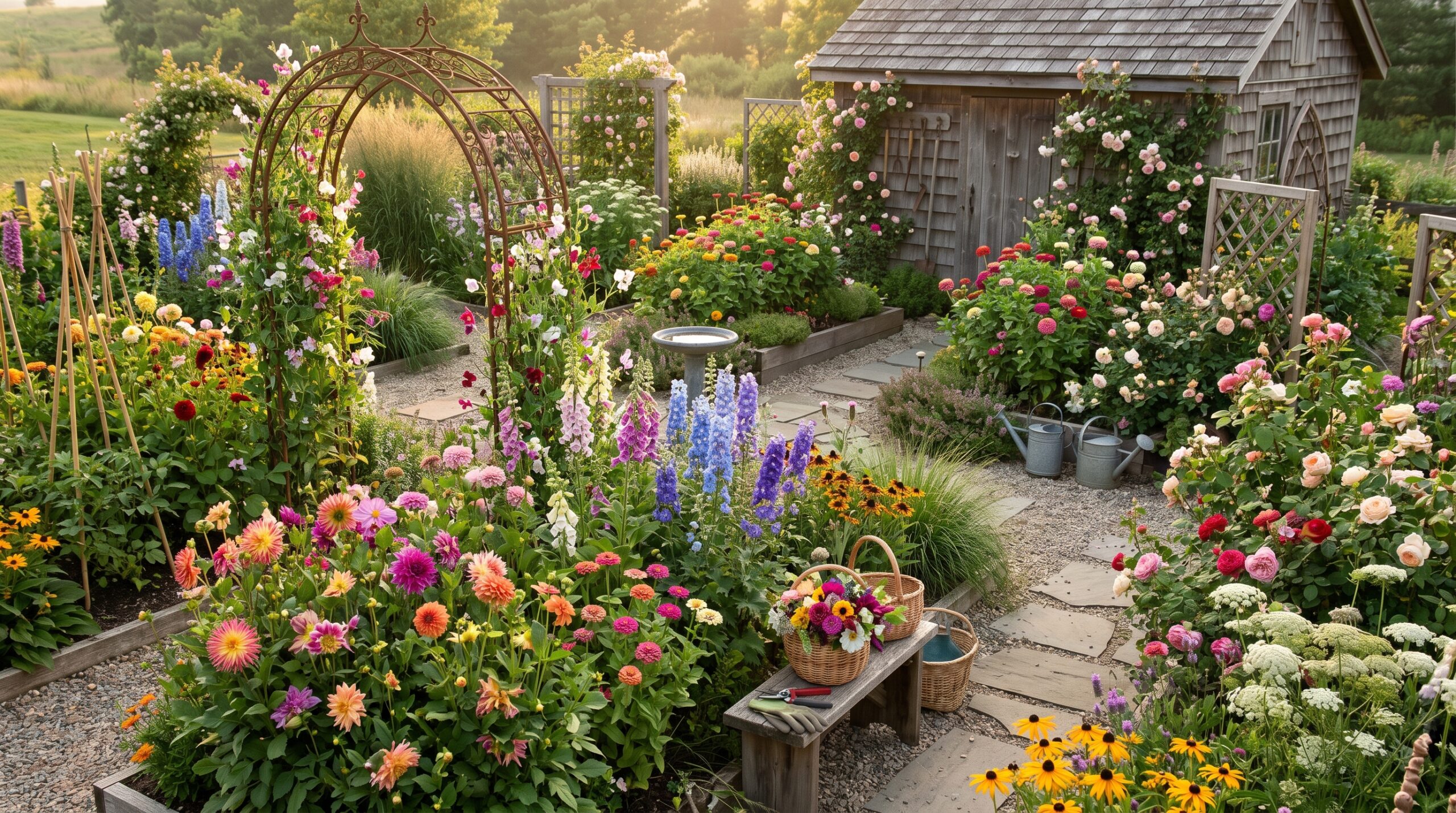
Cut flowers aren’t just plants; they’re living bouquets that grow, breathe, and transform your space season after season.
A thoughtful cut flower garden layout doesn’t just look pretty—it makes harvesting easier, boosts bloom production, and lets you enjoy a smorgasbord of colors and fragrances all year long.
Imagine stepping outside each morning, snipping whatever your heart desires for that day’s vase. That’s the magic we’re building here.
1. Classic Linear Rows
Planting in straight, organized rows may sound old‑fashioned, but it’s one of the most efficient ways to manage a cut flower garden.
Rows naturally create paths so you can walk between beds without stepping on tender plants.
If you’ve ever pressed a plant to the soil by accident, you know how frustrating that can be!
Why it works:
- Easiest layout for planting and harvesting
- Great for beginners
- Ideal for mechanized watering or fertilizing
Pro tip: Seed taller flowers (like sunflowers or cosmos) in back rows with shorter blooms (like zinnias or marigolds) in front.
It keeps everything visible and accessible.
Think of linear rows like the aisles of a grocery store—everything has a place and you can grab what you need without a scramble.
2. Circular or Spiral Beds
There’s something magical about a spiral flower bed. It’s like the petals of a giant rose unfolding across your yard.
This layout works especially well in smaller gardens because you can plant more flowers per square foot.
Benefits:
- Maximizes space
- Creates a focal point
- Easy to circulate around
Visualize walking around the bed in a spiral path—each section reveals new color and texture.
A spiral bed encourages you to plant in height gradients: low at the outside, tall at the center.
Planting tip: Use the tallest, structural flowers (like larkspur or delphinium) in the center.
3. Grid Layout (The Square Foot Approach)
If you’ve ever planted a veggie garden using the square foot gardening method, you already understand this layout: a grid of evenly spaced squares, each planted with specific flowers.
It’s efficient, tidy, and helps maximize diversity. You’ll often plant fast growers in one square, slower bloomers in another.
Why gardeners love it:
- Easy to plan
- Perfect for succession planting
- Reduces wasted space
You can allot one square to tall gladiolus and use multiple squares for compact clusters of sweet pea vines.
It’s like organizing your garden closet by color, height, and bloom time.
Quick stat: Plant spacing can increase production by up to 30–40% when optimized with this layout because plants aren’t competing unnecessarily for light and nutrients.
4. Cottage Garden Chaos (Organized Madness)
A cottage garden layout looks relaxed, romantic, and gloriously overflowing—as if each flower arrived by happy accident.
But here’s the secret: it’s not random. True cottage gardens have balance, repetition, and intentional layering.
The principle: mix tall, medium, and low flowers together, then repeat color and form throughout the garden.
This is the layout I first used when I started gardening at age 12.
My mom warned me it would be “a wild jungle,” but that chaos gave me bouquets every week from May to frost.
Best flowers for this style:
- Lavender
- Daisy varieties
- Sweet peas
- Snapdragons
- Calendula
The visual impact is what people remember—the kind that makes neighbors stop and ask, “How do you keep this looking so beautiful?”
5. Rows with Interplanted Herbs
Want flowers and fragrance? Pair your cut flowers with herbs in tidy rows. Herbs don’t just smell great—they can improve pest control and attract pollinators.
Examples:
- Basil with zinnias
- Parsley under cosmos
- Thyme at row edges
Many pollinators are herb‑obsessed: studies show gardens with diverse herbs can increase beneficial insect visits by over 60%, leading to healthier blooms and bigger harvests.
This layout is both practical and delicious—not just visually, but aromatically and ecologically.
6. Pollinator‑Friendly Border Beds
A border bed isn’t just decoration; it’s a living welcome sign for bees, butterflies, and hummingbirds.
Plant cut flowers along your garden or yard edges in tight clusters so pollinators can easily spot them.
Top pollinator flowers:
- Echinacea (Coneflower)
- Black‑eyed Susan
- Salvia
- Bee balm
- Asters
Planting tips:
- Group flowers by color and bloom time
- Add a water source nearby
- Avoid harsh pesticides
This isn’t just aesthetic—it’s functional. Your cut flowers will thrive when pollinators visit regularly.
7. Raised Bed Arrays
Raised bed gardens have exploded in popularity—gardeners appreciate better drainage, soil control, and easier maintenance.
For cut flowers, raised beds allow you to group blooms by type or height while keeping beds tidy.
Advantages:
- Better soil conditions
- Less bending and weed pressure
- Easier irrigation
Because raised beds can be organized into tight clusters, they’re ideal for succession planting—so you’re harvesting blooms from spring into late fall.
If your back aches after kneeling, this layout is a game‑changer.
8. The “Striped Field” Layout
This layout is literally rows of colors, like stripes on a candy wrapper. Alternating rows of different flower types create a dramatic visual effect.
Useful for:
- Sunflowers with cosmos
- Zinnias with dahlias
- Snapdragons with statice
The key here is repetition. Making stripes across your garden creates rhythm and clarity—almost like a floral painting.
9. Tunnel or Arch Flower Pathway
Do you want your garden to feel magical? Build an archway or tunnel and plant climbing cut flowers on each side.
Think:
- Sweet peas
- Morning glories
- Climbing roses
- Clematis
As vines grow together overhead, you get a living hallway of blooms.
This layout turns your garden into an experience, not just a collection of beds.
If someone asked me for a design that “wows,” this is one of my first recommendations.
10. Pocket Planting
Pocket planting is like giving each plant its own room in a garden “neighborhood.” You cluster 3–5 plants in each pocket, leaving space in between.
This approach:
- Improves air circulation
- Reduces disease pressure
- Makes harvesting easier
It works particularly well for cut flowers that need space to grow into full blooms—like delphiniums, dahlias, and peonies.
Picture a grid where each square has its own little garden party. That’s pocket planting.
11. Triangle or Wedge Beds
Triangular beds create energy and direction. They’re especially striking near a garden entrance or in a corner.
Because one side is shorter, you plant shorter flowers there, and gradually increase height toward the longest side.
This creates a visual slope that’s much more interesting than flat rows.
When guests enter your garden, their eyes naturally follow the wedge shape—just like watching waves rise higher and higher before cresting.
12. The Cutting Garden “Block”
If your goal is maximum bouquet production, dedicate a big rectangular block just for harvesting flowers.
This layout benefits from:
- High density
- Easy watering
- Efficient harvesting
Plant flowers in blocks by type, so you can walk down a block and harvest an entire bouquet in minutes.
For example:
| Block | Flower Type |
|---|---|
| A | Cosmos |
| B | Zinnias |
| C | Marigolds |
| D | Gladiolus |
Think of it like a kitchen garden—but for flowers instead of food.
13. Mixed Heights for Depth
A layout that gradually ascends from low to high gives your garden depth and drama.
Start with low plants at the front:
- Sweet alyssum
- Pansies
- Bachelors’ buttons
In the middle, place medium blooms:
- Snapdragons
- Ranunculus
- Cosmos
And at the back:
- Hollyhocks
- Sunflowers
- Foxgloves
It’s like forming a staircase of blooms.
This isn’t just aesthetic: taller plants shield smaller ones from harsh winds.
14. Waves of Color
Forget straight rows—try curved beds that mimic waves. These designs feel organic, natural, and soft.
Plant color blocks that follow the wave’s rhythm. For example:
- Yellow bed
- Pink bed
- White bed
- Purple bed
When viewed from above (or while walking past), the curves ripple across your garden like the sea.
This layout works beautifully near patios or seating areas because it creates a sense of motion and flow.
15. Sun & Shade Zones
Every garden has areas that get full sun, partial sun, or shade. Map those zones, then assign flowers accordingly.
Full sun: sunflowers, zinnias, marigolds
Partial shade: cosmos, lisianthus, snapdragons
Shade: sweet woodruff, hellebores
Grouping plants by light needs makes them healthier—and that means more stems for your vase.
16. Rhythm & Repetition Flower Bands
Repeating patterns creates harmony. This layout uses bands of flowers repeated across the garden.
Try something like:
- Zinnias
- Cosmos
- Dahlias
- Larkspur
Then repeat that band again and again. It’s like a floral soundtrack where the chorus keeps coming back.
This approach makes your garden feel cohesive and professionally designed—even if you planted it yourself.
17. Block Planting by Bloom Time
Instead of grouping by plant type or color, group by when they bloom.
Early spring
Summer peak
Late fall
Arrange these blocks so as one finishes, another begins.
This ensures constant cut flower availability throughout the season.
Plants like sweet peas and snapdragons bloom early, daisies and zinnias take over mid‑season, and asters finish strong in fall.
This layout is like a well‑timed symphony where every section enters at just the right moment.
18. Vertical Support Structures
Don’t let tall climbers hijack your garden’s space. Use trellises, grids, and stakes to train flowers vertically.
Vertical layouts help:
- Save space
- Increase air circulation
- Make harvesting easier
Flowers like morning glories, sweet peas, and hops climb beautifully—and give you blooms at eye level.
Notable stat: Vertical gardening can increase yield per square foot by up to 200% compared to traditional ground beds.
19. Cut Flower Meadow
If you want a low‑maintenance, natural look, consider a cut flower meadow.
This is more than scatter planting. It’s strategic:
- Choose a seed mix with staggered bloom times
- Include fillers like yarrow or Queen Anne’s lace
- Maintain pathways for access
This layout feels wild and romantic but gives an abundance of blooms for picking throughout the season.
If your style leans toward the whimsical and naturalistic, this is your garden manifesto.
Practical Planning Tips for Any Layout
Choose the Right Soil
Flowers bloom best in loamy, well‑drained soil. Amend clay or sandy soils with compost for better water retention and root growth.
Water Consistently
Most cut flowers need 1–1.5 inches of water per week. Water deeply in the morning to reduce evaporation and fungal issues.
Fertilize Strategically
Flowers are heavy feeders. Use a balanced fertilizer (like 10‑10‑10) once a month during growing season.
Deadhead Habitually
To keep blooms coming, remove spent flowers. It may feel tedious, but it dramatically increases yield.
Stagger Planting for Continuous Blooms
Plant in waves every 2–3 weeks. This ensures no long gaps between blooms.
Quick Pronunciation of Popular Cut Flowers
- Cosmos: KOZ‑muhs
- Delphinium: del‑FIN‑ee‑um
- Lisianthus: lih‑ZAN‑thuss
- Snapdragons: SNAP‑dragons
Knowing how to say the names makes it easier to communicate with nurseries and fellow gardeners!
My Personal Garden Secret
Early in my gardening journey, I planted everything “where it fit.” I ended up with a wild patch that looked like chaos—and honestly, some days it was chaos. But every vase I filled was magical.
The lesson? A layout isn’t about perfection. It’s about making the garden work for you, so you can actually pick flowers with joy, not frustration.
Final Thoughts
Your cut flower garden is more than a plot of earth—it’s a living rhythm of seasons, colors, and life. Whether you embrace neat rows, chaotic cottage charm, or dreamy meadow flow, the right layout helps you:
- Grow more blooms with less effort
- Harvest more stems throughout the season
- Enjoy a beautiful space that speaks to your style
If you read this and felt excited instead of overwhelmed, you’re ready. Grab your notebook, sketch that first layout, and start planting. Your best bouquets are waiting.