25 Backyard Kids Play Area Ideas
If you’ve ever watched kids turn a cardboard box into a spaceship, you already know this truth: they don’t need much—just the right kind of space.
A backyard can become a jungle, a castle, a racetrack, or even a quiet reading nook. You just have to design it with intention.
I’ve experimented with different setups over the years—some were hits, others… well, let’s just say the kids ignored them completely.
So here’s what actually works: play areas that invite imagination, movement, and independence.
Let’s build something your kids won’t want to leave.
1. Create a Multi-Zone Play Layout
Think of your backyard like a mini amusement park. Not everything needs to be in one spot.
Divide your space into zones:
- Active play (slides, swings)
- Creative play (sand, art)
- Quiet time (reading or tents)
Why it works: Studies show kids engage 40% longer when play areas are varied rather than repetitive.
When one activity gets boring, they naturally move to the next.
I once grouped everything together in a corner—big mistake. The kids got overwhelmed and lost interest fast.
Once I spread things out, suddenly the whole yard felt alive.
2. Build a DIY Wooden Playhouse
A playhouse is like giving your child their own tiny universe.
You don’t need anything fancy:
- Reclaimed wood
- Old windows
- A splash of paint
Add details like a mini mailbox or flower boxes, and suddenly it’s not just a structure—it’s a story waiting to happen.
Pro tip: Let your kids help paint it. They’ll feel ownership and use it more.
3. Install a Classic Swing Set
You can’t go wrong with a swing set. It’s the heartbeat of any backyard play area.
Options to consider:
- Traditional swings
- Tire swings
- Nest swings
There’s something almost hypnotic about swinging—it’s calming and exciting at the same time. Even older kids keep coming back to it.
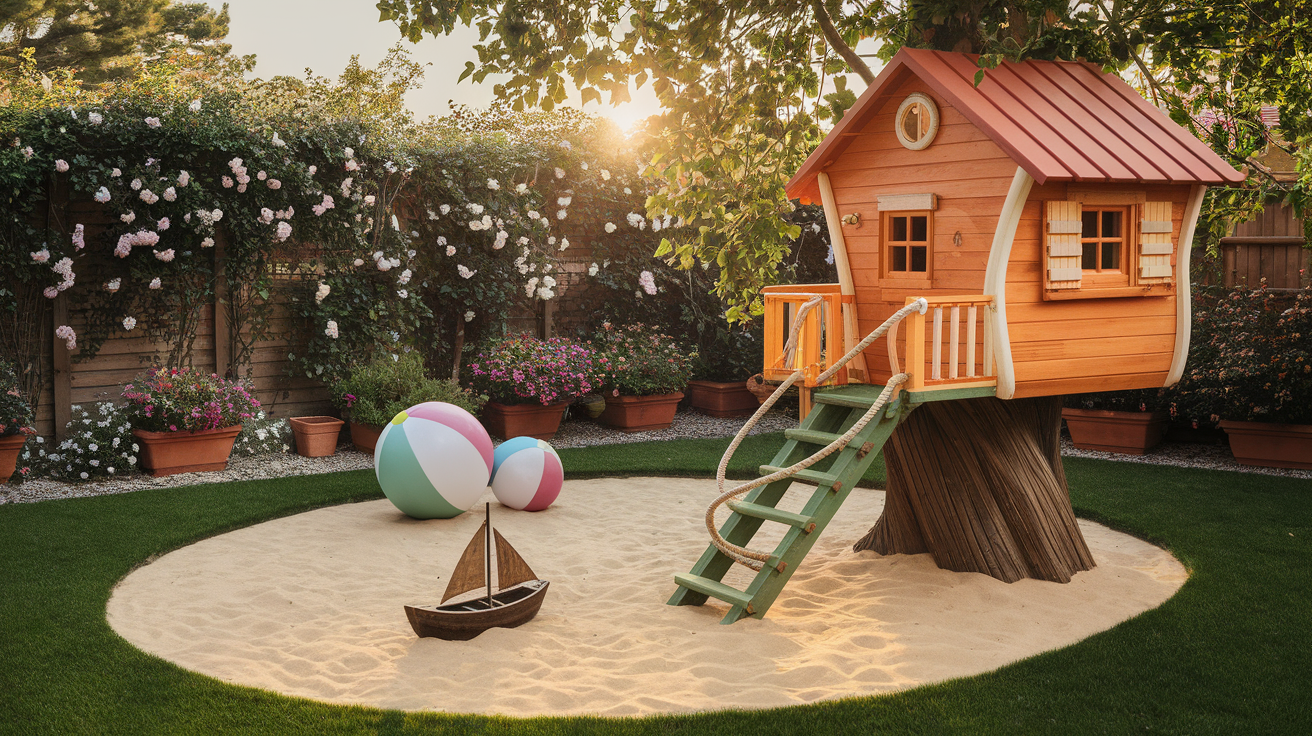
4. Design a Sand Play Zone
A sand area is messy—but magical.
Kids dig, build, pour, and create endlessly. It’s open-ended play at its best.
Make it better:
- Add buckets, shovels, molds
- Include a cover to keep it clean
- Use borders to contain the sand
I used to resist sand because of the cleanup, but honestly, the hours of engagement are worth every grain.
5. Add a Backyard Obstacle Course
Turn your yard into a mini adventure challenge.
Include:
- Balance beams
- Tires to jump through
- Rope climbs
You can rearrange it every few weeks to keep things fresh.
Fun fact: Physical play like obstacle courses improves coordination and problem-solving skills by up to 25% in young children.
6. Install a Slide (Standalone or Attached)
A slide is simple but powerful.
Even a small one can keep kids entertained for hours. If you already have a play structure, attach one. Otherwise, a standalone slide works just as well.
7. Create a Nature Exploration Corner
Kids are natural explorers.
Set up a space with:
- Rocks
- Plants
- Bug observation kits
Add a magnifying glass, and suddenly your backyard becomes a science lab.
I once watched a child spend 30 minutes studying ants. No screens, no toys—just curiosity.
8. Build a Treehouse or Elevated Platform
If you have a sturdy tree, you’re sitting on gold.
A treehouse becomes:
- A lookout tower
- A secret club
- A quiet escape
If trees aren’t an option, build a raised platform instead.
9. Add a Water Play Station
Water transforms everything.
Simple ideas:
- Splash tables
- Sprinklers
- DIY water walls
Important: Always ensure safety and supervision.
On hot days, this becomes the most popular spot—guaranteed.
10. Set Up an Outdoor Art Station
Not all play is physical.
Create a space with:
- Chalkboards
- Easels
- Washable paints
Let kids get messy outdoors instead of inside. It’s a win for everyone.
11. Include a Mini Sports Zone
For active kids, this is essential.
Add:
- A small soccer goal
- Basketball hoop
- Target practice wall
You don’t need a full field—just enough space to move.
12. Build a Climbing Wall
A climbing wall adds challenge and excitement.
Keep it:
- Low to the ground
- Safe with padding underneath
Kids love testing their limits. This gives them a safe way to do it.
13. Create a Cozy Reading Nook
Balance the chaos with calm.
Use:
- Outdoor cushions
- Shade (umbrella or canopy)
- A small bookshelf
This is where kids recharge.
14. Add a Trampoline Area
A trampoline is like a magnet.
Kids bounce, laugh, and burn energy fast.
Safety tips:
- Use nets
- Place on soft ground
- Supervise younger kids
15. Design a Garden Patch for Kids
Let kids grow something.
Even a small patch works:
- Flowers
- Herbs
- Vegetables
This teaches patience and responsibility in a hands-on way.
16. Install a Zip Line (If Space Allows)
This one’s a game-changer.
A zip line turns your backyard into an adventure park. Just ensure:
- Proper installation
- Strong anchors
- Safety gear
17. Use Tires for Creative Play
Old tires are surprisingly versatile.
Use them for:
- Climbing
- Jumping
- Building structures
They’re durable and budget-friendly.
18. Add a Picnic and Snack Area
Kids get hungry. Fast.
Set up:
- A small table
- Benches
- Shade
This becomes a social hub during playtime.
19. Create a Music Wall
Let kids make noise—outdoors.
Attach:
- Pots and pans
- Bells
- Wooden pieces
It’s chaotic, but in the best way.
20. Build a Fort or Tent Zone
A fort is where imagination runs wild.
Use:
- Fabric
- Poles
- Old sheets
Kids love having a “secret” space.
21. Add a Balance Beam or Stepping Stones
Simple but effective.
These improve:
- Balance
- Coordination
- Confidence
You can make them from लकड़ी, stones, or logs.
22. Install Outdoor Lighting for Evening Play
Don’t let the fun stop when the sun sets.
Use:
- String lights
- Solar lamps
It creates a magical atmosphere—like a backyard fairy tale.
23. Include a Mud Kitchen
Yes, it’s messy. Yes, it’s worth it.
Kids mix, pour, and pretend to cook using:
- Old utensils
- Containers
- Water and dirt
It’s sensory play at its finest.
24. Add a DIY Racetrack
For toy cars or bikes.
Create paths using:
- Paint
- Stones
- Wood borders
Kids love racing and creating their own rules.
25. Keep It Flexible and Evolving
This might be the most important idea.
Kids grow. Interests change.
What works today might be ignored next year.
So:
- Rotate toys
- Rearrange zones
- Add new elements gradually
Think of your backyard as a living space—not a finished project.
Final Thoughts
Here’s the truth most people miss: a great backyard play area isn’t about spending more—it’s about designing smarter.
Kids don’t care if something is expensive. They care if it’s:
- Fun
- Interactive
- Theirs
I’ve seen a simple rope tied to a tree beat a $500 playset. Why? Because it sparked imagination.
So start small. Build slowly. Watch how your kids play—and let that guide you.
FAQs
What is the most important feature in a kids’ backyard play area?
The most important feature is variety. Kids need different types of play—physical, creative, and quiet—to stay engaged.
How do I make a backyard play area safe?
Use soft surfaces, secure equipment, and always supervise younger children. Regularly check for wear and tear.
What is a budget-friendly way to create a play area?
Start with DIY ideas like:
- Tire play zones
- Sand areas
- Homemade forts
You can build an amazing space without spending much.
How big should a kids’ play area be?
It depends on your space, but even a small backyard can work. Focus on smart layout rather than size.
How do I keep kids interested over time?
Rotate toys, add seasonal activities, and occasionally rearrange the setup. Change keeps excitement alive.
If you take one thing from this guide, let it be this: your backyard isn’t just land—it’s a childhood in progress. Build it with care, and it will pay you back in laughter you’ll never forget.